





Research
Joint Research Chair / Research Alliance Laboratories
Joint Research Chair
A joint research chair is a research organization created within The University of Osaka using funds provided by an outside company or other institution. The joint research chair system is intended to promote the creation of high-grade research results. In addition to the funds, the university also receives researchers and other resources from the company, and The University of Osaka faculty works together with the company researchers on an equal basis to carry out joint research. This system enables The University of Osaka to expand its research and contribute to society by maintaining long-term research centers, operated jointly with the industrial world, in academic areas which meet the diverse needs of and contribute to the advancement of society.
Joint research chairs are established in order to conduct joint research, and the research is their highest priority. These independent research organizations established at The University of Osaka carry out research that is coordinated by the university and by the company funding the research, and are characterized by the flexibility and fast pace of their research activities. This system aims to produce results that are different from conventional joint research systems or endowed chairs. As of May 2026, we have 19 Joint Research Chairs in operation.
Joint Research Chair(As of May 2026)
More Details(Laboratories at the School/Graduate School of Engineering)
Research Alliance Laboratories
Research bases to deploy various university-industry collaboration by attracting research organizations of enterprises to The University of Osaka. Enterprises and The University of Osaka facilitate industrialization of research achievements, improve sophistication of research activities, and nurture human resources, by utilizing mutual research information, technologies, human resources and facilities at the common place. As of May 2026, we have 10 Research Alliance Laboratories in operation.
Research Alliance Laboratories(As of May 2026)
More Details(Laboratories at the School/Graduate School of Engineering)
Institutions
Educational Research Facilities Attached to Graduate School of Engineering
Web SiteResearch Center for Ultra-Precision Science and TechnologyOPEN
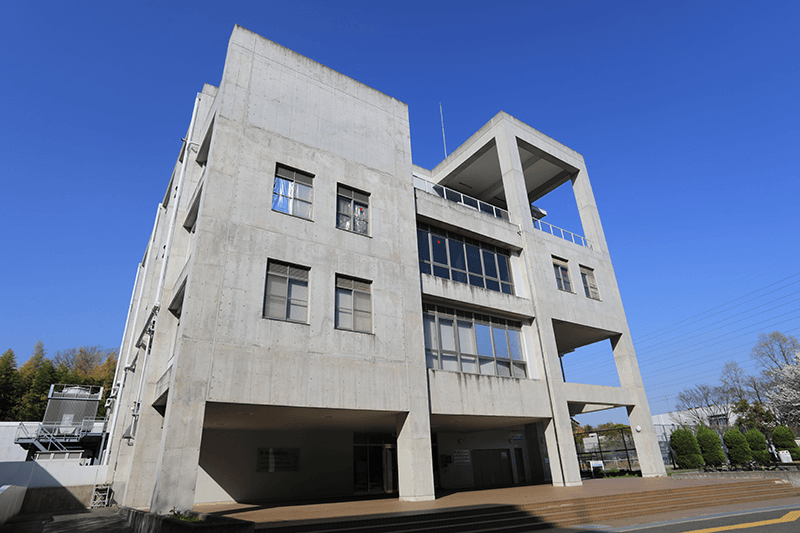 Established in April, 2001
The purpose of the Center is the continuous development of original technology in “atomistic fabrication technology,” where fundamental physical and chemical phenomena utilized in engineering processes such as ultra-precision machining, thin film growth and nanofabrication should be analyzed and elucidated from the atomistic and electronic perspectives. Objectives of the Center are to develop an original apparatus for manufacturing useful “products” and to evaluate the performance of the products.
Web SiteEducation and Research Center for
Advanced Structural and Functional Materials DesignOPEN
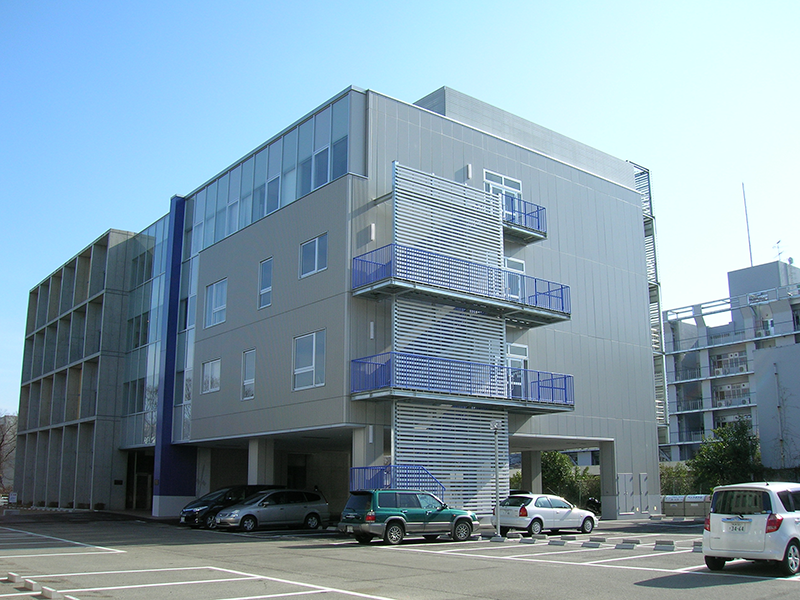 Established in April, 2008
The Center was established to promote education and research on Advanced Structural and Functional Materials Design. One aim of the Center is to foster young researchers who are internationally minded and competent enough to take the initiative in independent studies through our education programs. The Center also seeks to establish an internationally renowned research center on materials science.
Web Site Center for Future InnovationOPEN
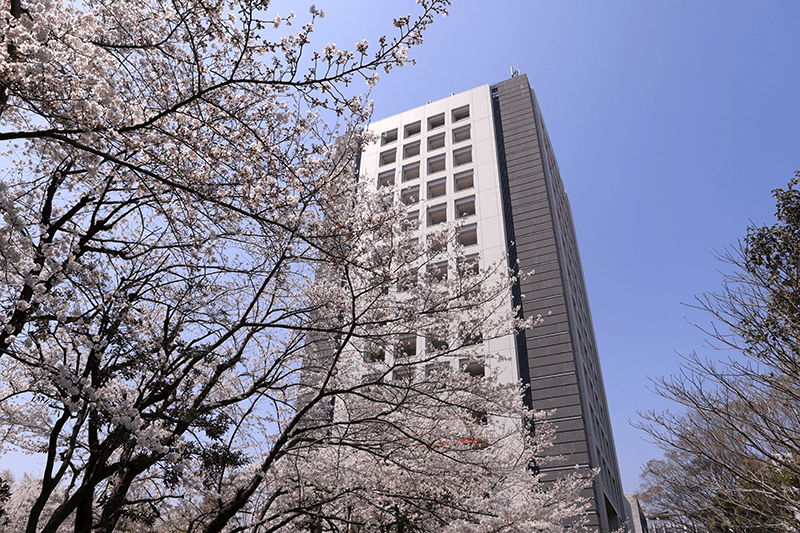 Established in April, 2020
As of April 2020, the Center for Future Innovation of the Graduate School of Engineering was launched integrating the Center for Open Innovation Research and Education and the Strategy Management & Support Office, both of which were previously run by the School itself. In response to social issues and needs, the Center will foster the development of interdisciplinary research and new academic fields, aiming to promote problem solving and offer future-oriented innovations. To this end, the Center will focus on creating a strategic base that will lead these academic fields. In relation to this, the Center provides support for “TechnoArena”, which is a unique research and educational system to promote integrative research and educational program across divisions of the School. The Center will promote the development of innovations with venture initiatives in mind, take part in co-creation to resolve social issues that align with society’s needs, support the growth of collaborative and integrative research activities, develop future leaders, and oversee the faculty’s research activities. Together, we will strive to improve the School’s research capabilities. Furthermore, we will push forward to improve our educational roles through steps such as offering an interdisciplinary educational program as well as the Course of Industry-University-Government Co-Creation, supporting recurrent education, and aiding the students’ pursuit of their own academic and research themes.
Web SitePhotonics CenterOPEN
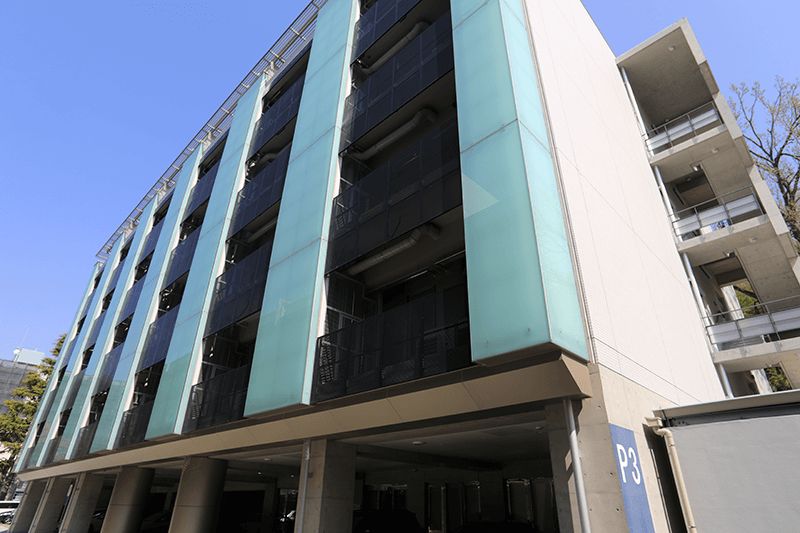 Established in April, 2001
The Center is a Creation of Innovation Center based on industry-academia-government collaboration. It was launched with the objective of creating a “forum” for the seamless process from the research of industry-academia-government collaboration to the application in society of the results obtained, and to further develop and continue with the Ministry of Education, Culture, Sports, Science and Technology (MEXT) -run Creation of Innovation Centers for Advanced Interdisciplinary Research Areas Program “Photonics Advanced Research Center,” between the fiscal years 2007 and 2016. We attempt to fuse different areas with a base of the photonics field, and promote the fusion of advanced evaluation analysis and processes, devices and apparatus; new functional optical properties and materials; biotechnology and sensors, and other fusion research as well as education. Through a diversity of educational programs we turn out human resources who will be able to shoulder the next-generation industries and perform on the international stage, while simultaneously creating a global center for photonics that will be the foremost in Japan.
Web Site3DPTec Integrated CenterOPEN
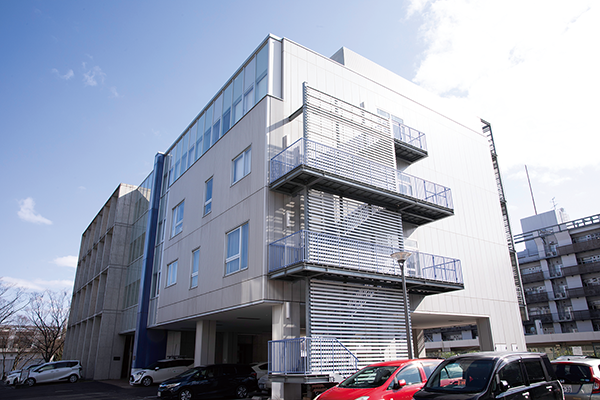 Established in April, 2026
3DPTec Integrated Center, affiliated with the Graduate School of Engineering, was established in April 2026. The Center possesses a diverse range of internationally leading 3DP (three-dimensional printing) technologies and aims to establish a globally recognized brand such that “3DP means The University of Osaka” and “The University of Osaka means 3DP.” The Center was reorganized from the Anisotropic Design & Additive Manufacturing Research Center, which was originally established in December 2014 as the first AM center at a national university in Japan. The Center has a unique digital twin platform that bidirectionally integrates physical-space realization through state-of-the-art 3DP with multi-physics and multi-scale simulations in cyberspace. By further incorporating cutting-edge AI technologies, the Center is driving the DX (digital transformation) and AX (AI transformation) of 3DP. The Center advances six priority areas of high societal demand: medical devices, aerospace components, functional catalysts, future foods and artificial organs, large-scale offshore wind turbines, and art. The Center pursues seamless R&D from fundamental research to societal implementation, as well as interdisciplinary research that bridges the sciences and humanities. In collaboration with a wide range of researchers across the Graduate School of Engineering and related institutions, the Center strives to realize an “ultra-custom society” in which people can instantly obtain whatever they desire and does not merely refer to product customization; it envisions a dream society in which desired objects can be obtained immediately, transcending spatial barriers at “zero distance” — a cutting-edge endeavor made possible only at The University of Osaka.
Joint Use Facilities, Graduate School of Engineering
Radio Isotope LaboratoryOPEN
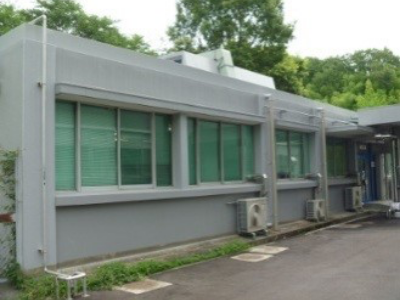 Established in August, 1968
The Radio Isotope laboratory founded in August 1968 for the experiments using radioactive materials and nuclear materials are available to the staff of Graduate School of Engineering. Researches treating various tracer-level materials and some nuclear materials are performed. The laboratory is operated by the steering committee for safety management of radiation protection and storage of nuclear materials and radioisotope wastes.
Material and Structural LaboratoryOPEN
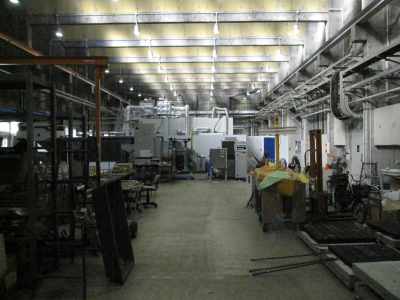
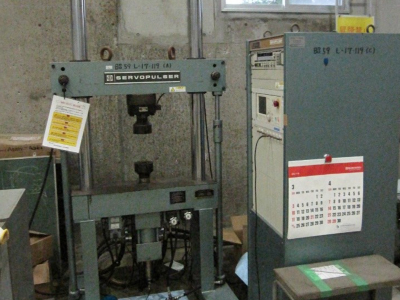
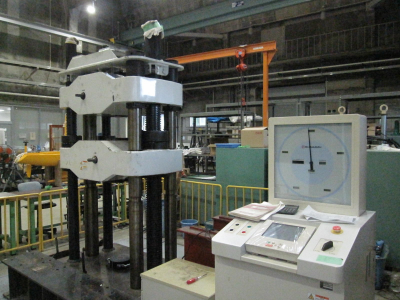 Established in February, 1969
This laboratory is one of the join-use facilities in the Graduate School of Engineering and the School of Engineering. Faculties and students in many departments use the equipments in this laboratory to study their research projects such as static and dynamic strengths of materials and structures.
1. Building
RC structure of one-story. Area919m2
2. Main Equipments
Slab Testing Machine
(Capacity : Dynamic load 300kN)
Electro-Hydraulic Material Testing Machine
(Capacity : Dynamic load 49kN, 98kN, 98kN) Universal Testing Machine
(Loading capacity : 2000kN)
A Number of other Testing Equipments, 50.
Work ShopOPEN
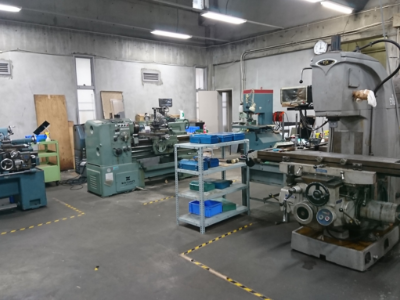 Established in April, 1969
It has been established for doing special work and making machine components and glassware for the use in research projects at the Graduate School of Engineering and the School of Engineering. The main facilities are composed of twenty machine tools such as lathes (5), milling machines (3), a wire cut electrical discharge machining, a machining center, a surface grinder, a welding machine and devices for glass work. Researchers or students can use machines for themselves and get instructions by the experts. While hull-time experts do their jobs.
Web SiteAnalytical Instrumentation FacilityOPEN
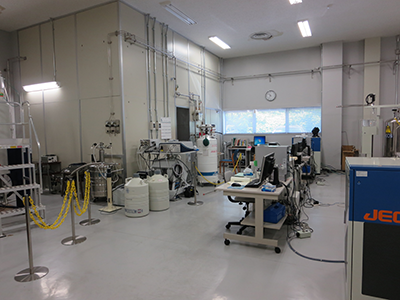 Established in April, 1969
The Analytical Instrumentation Facility has various analytical instruments performing structural and physicochemical analyses of materials and molecules. Particularly, NMR, EPR, MS, IR and CD machines are installed in the facility. The facility maintains these instruments and supports many researches in diverse field of fundamental and applied sciences such as chemistry, material science and molecular biology. In addition, tutorial classes about the instruments for researchers and students are held once or twice a year in the facility. The list of the instruments are shown in the facility homepage.
Education Center for Practical Machine Shop TechnologyOPEN
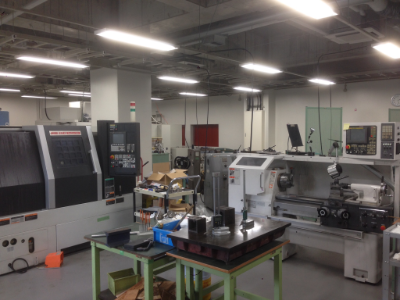 Established in April, 1969
It has been established for educating students for practical machine shop technology and also for making special work or machine components for the use in research works at the Graduate School of Engineering and the School of Engineering. The main facilities are composed of a machining center, a NC-lathe, a NC-milling machine, an electrodischarge machine and twenty generic machine tools such as lathes (8), milling machines (3), grinders (2).Instructors and experts educate students on educating time. And researchers or students can use machines for themselves and get instructions by the experts except on the educating time. While full-time expert does his job.
Common Testing HallOPEN
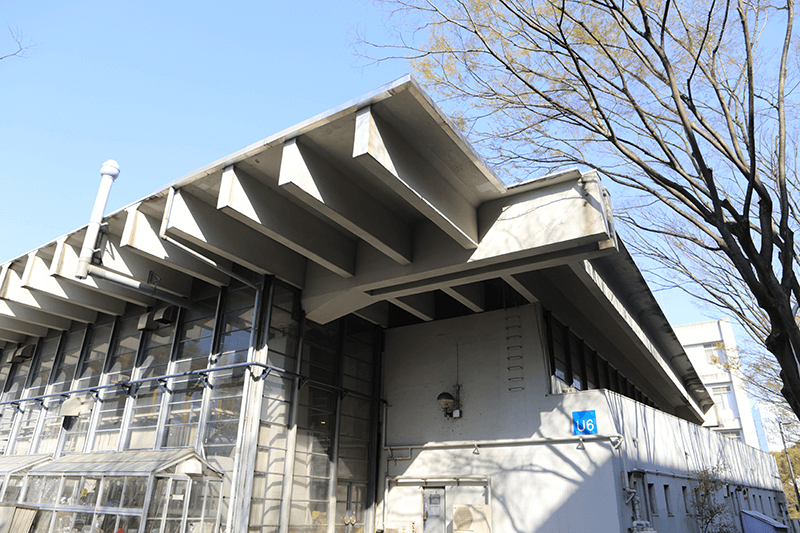 Established in March, 1970
It has been established for educating students for practical machine shop technology and also for making special work or machine components for the use in research works at the Graduate School of Engineering and the School of Engineering.
The main facilities are composed of a machining center, a NC-lathe, a NC-milling machine, an electrodischarge machine and twenty generic machine tools such as lathes (8), milling machines (3), grinders (2).Instructors and experts educate students on educating time. And researchers or students can use machines for themselves and get instructions by the experts except on the educating time. While full-time expert does his job.
Web SiteWind Tunnel for ResearchOPEN
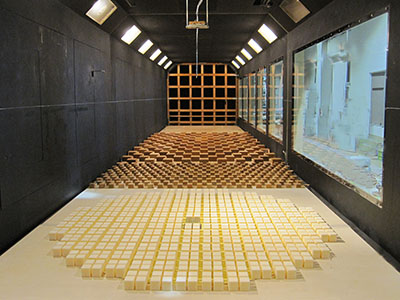
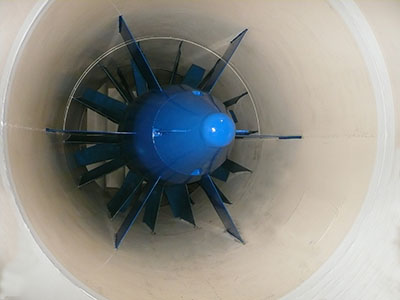
Established in April, 1981
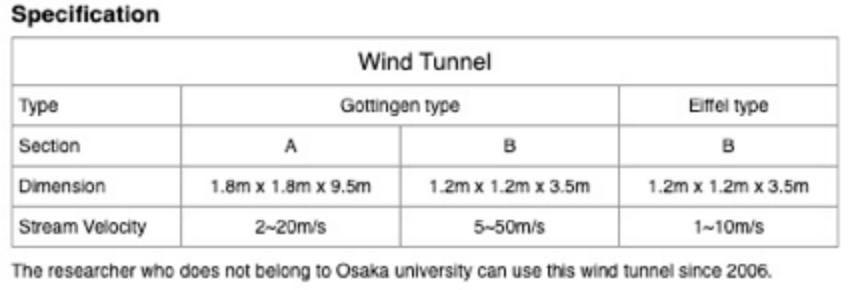
The wind tunnel is serving as a fundamental facility for research concerning mechanical problems in a variety of departments in the Graduate School of Engineering. Research areas include wind-proof performance of the structures and wind phenomena around large scale architectural structures, diffusion of pollutants into the atmosphere, airflow and contaminants distribution in a room, and research related to the dynamics and energy efficiency of wind energy etc.. The wind tunnel is designed on the basis of the following ideas:
- (1)To work as either the horizontal recirculating type or as the open type, by adopting variable pitch rotor, the latter type being mainly for the purpose of the experiments with smoke.
- (2)To allow the test section exchangeable between the two units of different sizes of cross section, depending on the scale of models and required wind velocity.
Web SiteInstitute of Free Electron LaserOPEN
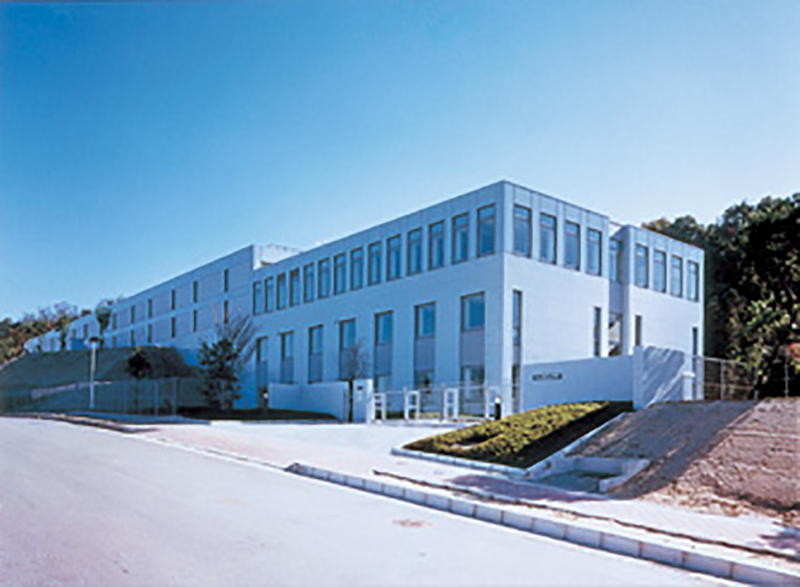 Established in April, 2000
Research and development of free electron laser (FEL) and its applications in wide science and technology fields are proceeded. The wavelength region of the FEL facility can cover from 0.23 to 100_m with five undulators using RF accelerated electron beam of energy of 30Å`165MeV. The field of FEL application spans over semiconductor and material research, nuclear physics and technology, biomedical diagnostics and treatments. Collaborative research programs are actively coordinated to connect the fundamental research results with new development of industrial technologies.
(2-9-5Tsuda-Yamate, Hirakata, Osaka573-0128, Japan)
Multi-Media Center(Engineering)OPEN
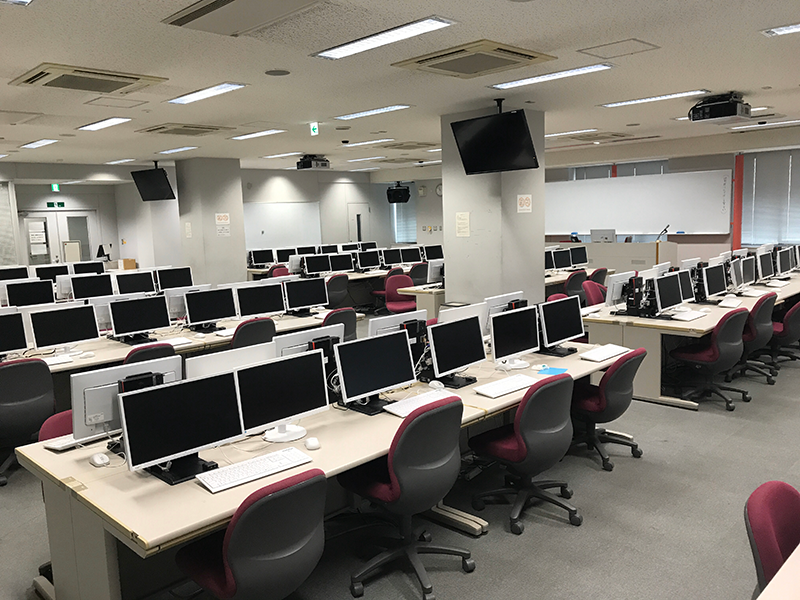 Established in April, 2002
This center serves the facility for education and research in the information processing and computer science and also serves as the Suita branch of D3 Center. In 2002, this facility was newly unified as the multi-media center in GSE common building. The center is equipped with terminals connected to the D3 Center for Information Processing of The University of Osaka, which are usually used for the practical lessons in the information processing education and research for the students of the School of Engineering and the Graduate School of Engineering. Historically, this facility was originally founded as a branch of the Computation Center, and transferred to the Graduate School of Engineering and the School of Engineering.
Web SiteLiaison OfficeOPEN
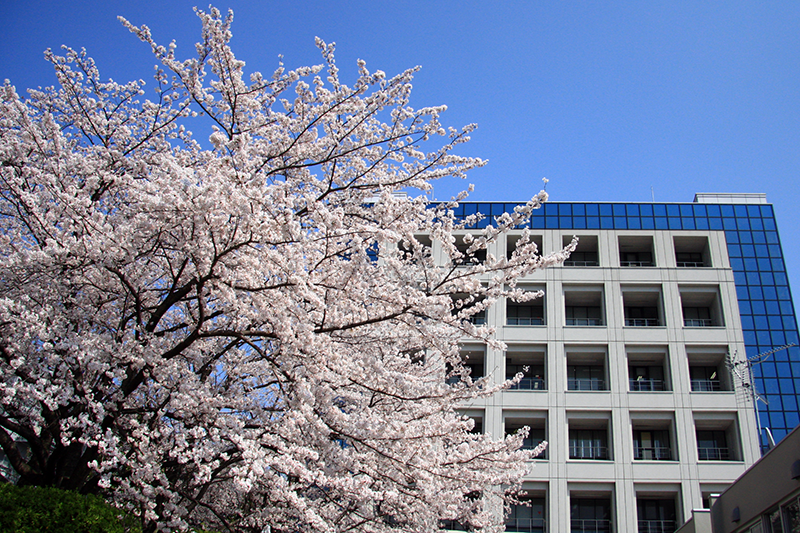 Established in April, 2003
The Liaison Office develops various activities at the Graduate School of Engineering in cooperation with industries and other communities. The office is composed of two sections. The Regional Collaboration Section promotes various regional collaborations, and accepts and solves technological inquiries and demands from industries, economic organizations, and research institutions. The Industrial Collaboration Section contributes to efficient, flexible and advanced collaborations with industries under contracts, and promotes advanced prior activities for the Joint Research Chairs and the Research Alliance Laboratories.
Web SiteCreative Design Studio on TechnologyOPEN
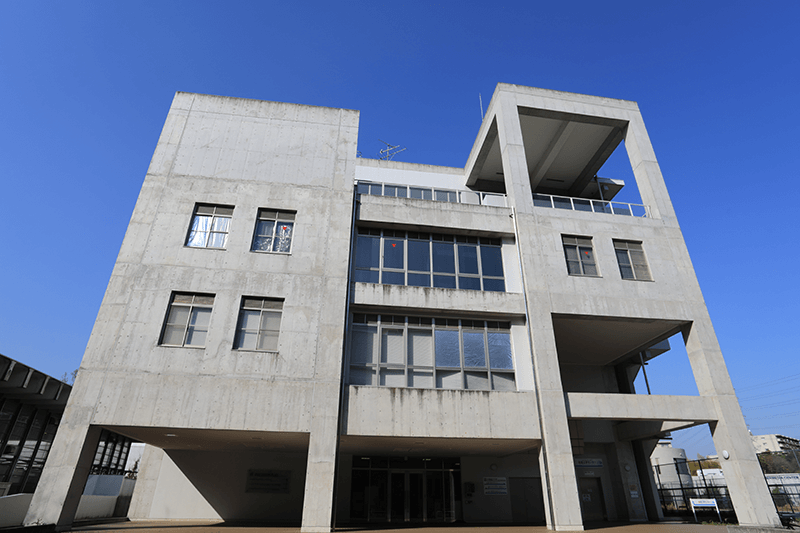 Established in April, 2003
Under today’s progresses in science and technology, engineering creativity becomes to be emerged through cooperative team activities among engineers with different views and backgrounds and process from generating innovative concepts to deploying them to products.This center provides learning spaces for developing students’ creativity, typically for project-based learning, under the above trend. Teams of students can discuss and work respectively in 16 small rooms. They can use CAD/CAM/CAE systems, various machine tools, a rapid-prototyping machine, etc. The central hall is the best for holding class-wide meeting, competition and exhibition. Since its establishment, many attractive courses have been offered at the studio.
Web SiteCenter for International AffairsOPEN
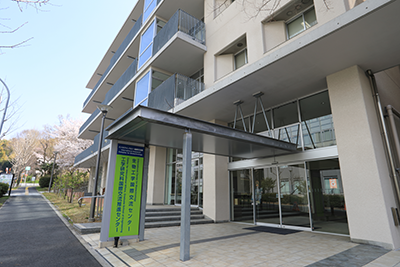 Established in April, 2013
The Center for International Affairs (C.I.A.) offers various forms of support for foreign students and researchers from around the world who come to Japan, so that they may live their everyday lives without distress, and devote themselves to their primary end, study and research. For foreign students in particular, the C.I.A. offers scholarship information as well as information concerning education in general, career support seminars (including counseling services), and the “Japanese Classes for Science and Engineering”. The Center also plans and hosts an excursion to research facilities outside of The University of Osaka, as well as gathering parties. Furthermore, the C.I.A. administers various projects that contribute to international education, such as “English for Engineering” classes for graduate students, U.S. Training Courses for Research and Presentation in Engineering and Science for graduate students, the promotion of mutual student exchange under the Exchange Agreement, and the “English Café Suita”, aimed at developing English abilities.
Web SiteResilience Support & Training CenterOPEN
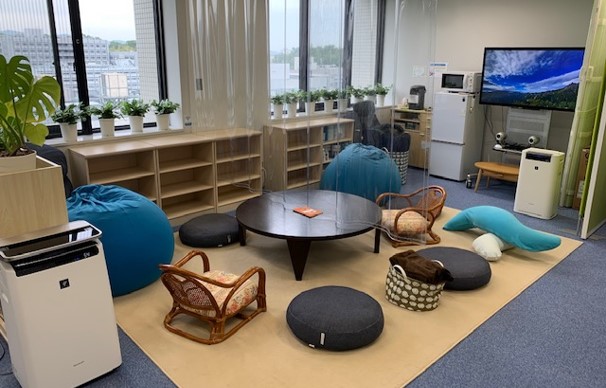 Established in August, 2024
The Resilience Support & Training Center was established on August 1, 2024, to support the smooth execution of education, research, and work for all members of the School/Graduate School of Engineering. The center aims to achieve this by providing stress care, assistance in organizing and resolving emotional concerns, and primarily operates a counseling room and a student support room.
The counseling room offers consultations with a certified psychologist for all members of the School/Graduate School of Engineering, including their families, addressing a wide range of concerns. The Resilience Support Room (student support room) provides a safe and secure space for students who need a place on campus, including those experiencing decreased motivation to study, social withdrawal, or difficulty attending laboratory activities. In addition, the center conducts seminars and various training programs as part of its resilience education initiatives.
Web SiteSustainable Infrastructure Research CenterOPEN
 Established in August, 2025
The Sustainable Infrastructure Research Center aims to enhance the sustainability of social infrastructure by addressing a wide range of challenges, including environmental issues, disaster resilience, and resource circulation, through interdisciplinary approaches. The center promotes advanced research utilizing cutting-edge measurement, analytical technologies, and data science to tackle urgent issues such as aging infrastructure and climate change adaptation. In collaboration with industry, government, and academia, the center emphasizes practical implementation to contribute to the realization of a safe, resilient, and sustainable society.
Projects
Large-scale Education and Research Projects(As of May 1,2026)