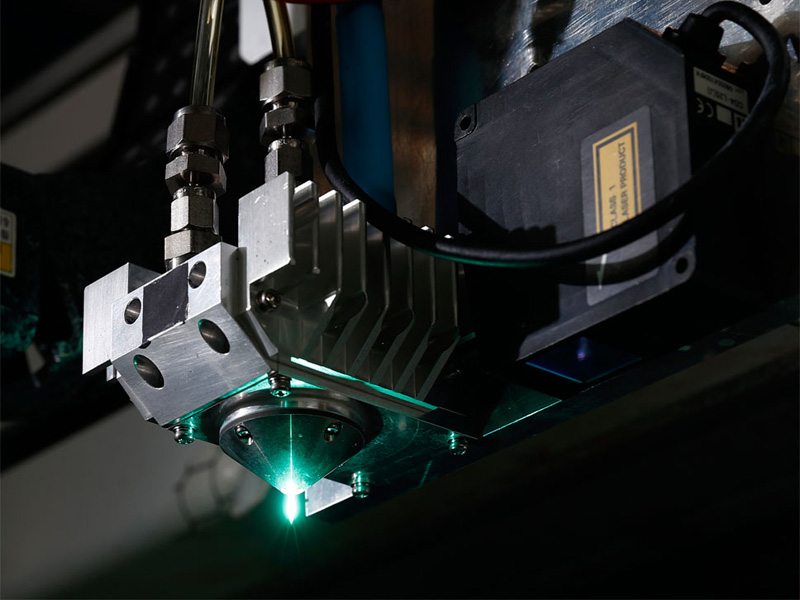
Since the dawn of history, civilization has evolved with continuous progress in manufacturing technologies. In this research area, we are creating innovative manufacturing technologies to manufacture state-of-the-art optical elements and semiconductor substrates that require nano- to sub-nanometer-level accuracy. Under the philosophy that new technology created by us triggers a new industrial revolution in the 21st century and contributes to the further advancement of humanity, we are immersed in the research and development of “nanoManufacturing processes” that achieve both extreme precision and efficiency.
Education and Research Center for Advanced Structural and Functional Materials Design
This Center is established for the purpose to continue the mission of the Global COE Program “Center of Excellence for Advanced Structural and Functional Materials Design” which provides a unique program to educate young scientist. In order to establish global class center of Materials Science in The University of Osaka, this center organizes the cooperation between departments, research institutes and research centers on materials science both inside and out side of university, including industry and organizations in oversea countries.
This center is located in “Yamamoto Memorial Hall” which was built based on the grant donated for the purpose of promotion of education and research on materials science at The University of Osaka.

The Center for Future Innovation (CFi) at the Graduate School of Engineering responds quickly to the challenges and needs of an increasingly diverse and complex society. Furthermore, CFi supports the generation of interdisciplinary scientific fields that will produce new innovations to solve various problems as well as to create future society, and promote the development of the next generation of research leaders. CFi especially addresses the following points:
[1] Planning and management of the TechnoArena, which responds quickly to social issues and needs, contributes to the creation of future society, and develops interdisciplinary research fields, along with implementing education related to such fields
[2] Promotion of the tenure-track program, support for researchers who will be leaders of the next generation, promotion of industry, government and academia collaboration, introduction of the University Research Administrator (URA) and Institutional Research (IR) to strengthen the research capabilities of the entire Graduate School of Engineering
[3] Practice to improve the educational capability of the Graduate School of Engineering by implementing industry-academia-government co-creation education, advanced interdisciplinary studies, and recurrent education
CFi consists of four areas: the area of TechnoArena, the area of planning research capability, the area of planning education capability, and the area of planning management capability to efficiently execute these [1]-[3] issues and enhance management capability by means of funding acquisition.
In the Area of TechnoArena, in addition to the Center of Excellence in Advanced Research Division, Incubation Division, and Excellent Young Researcher Support Division, we have established a Public Relations Strategy Division to accelerate public relations activities related to the TechnoArena.

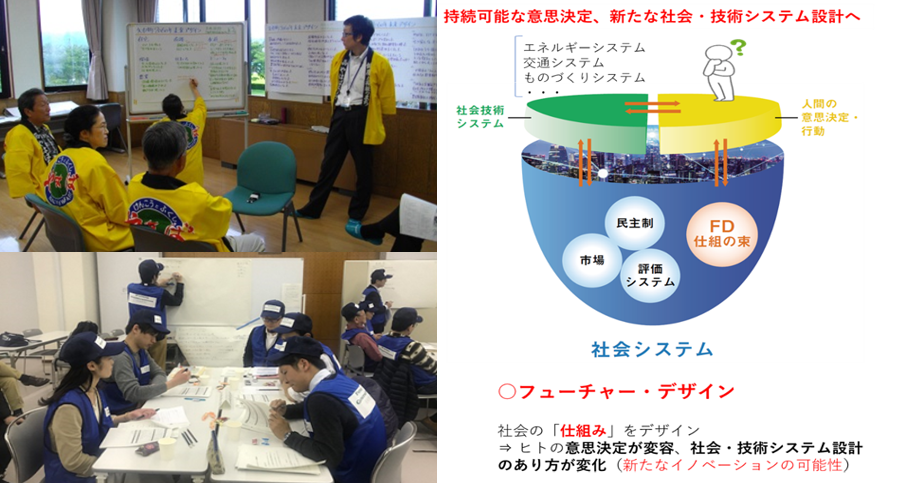
At Hara Laboratory, we study the design of social systems and technologies to address complex and long term issues related to the future and create a sustainable society. We also apply these systems and methodologies to policy design and the development of social and technological systems, and through co-creation among industry, academia, and government, we will implement various practices related to solving social issues and creating a sustainable society. Specifically, we aim to build a new foundation for social engineering that explicitly incorporates the “future” by using academic and engineering approaches to deepen “Future Design,” which refers to the design and implementation of social systems to pass on a sustainable society and environmental resources to future generations.
Photonics is the science and technology that advances the interaction between light and matter, with applications ranging from fundamental research to advanced industrial fields. Established in 2007, the Photonics Advanced Research Center (PARC) fosters cutting-edge research and development by leveraging the University of Osaka’s extensive photonics expertise, where over 100 laboratories actively pursue innovation in this field.
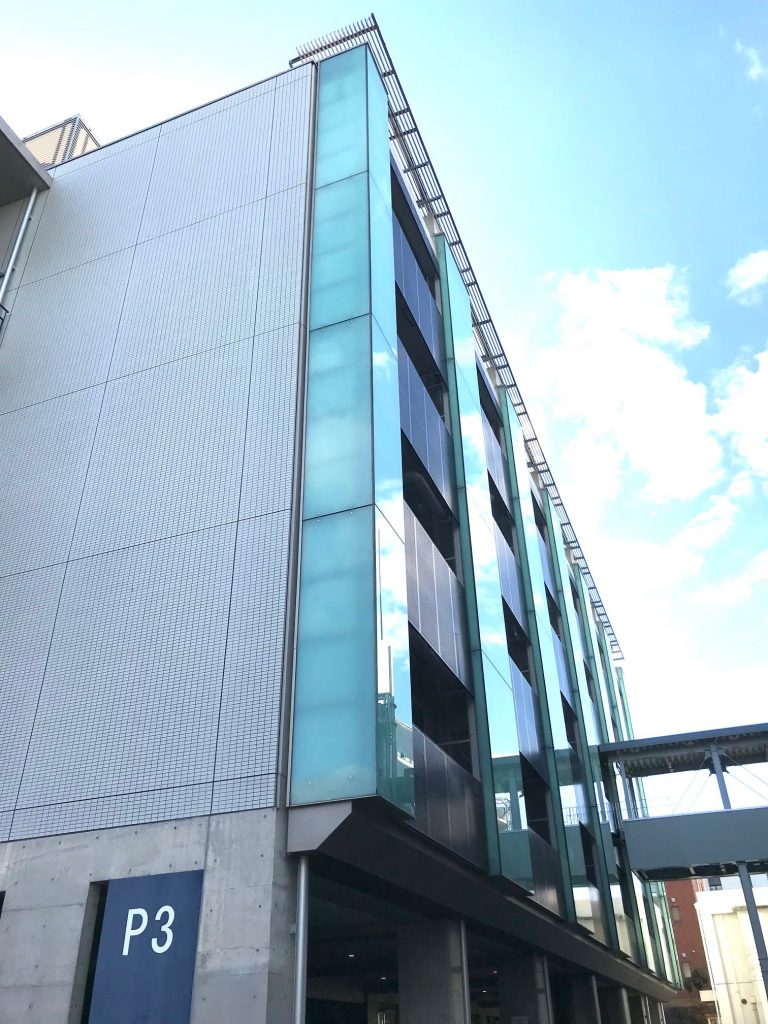
PARC was launched in FY2007 as part of the Ministry of Education, Culture, Sports, Science and Technology (MEXT)’s “Creation of Innovation Centers for Advanced Interdisciplinary Research Areas Program,” running for ten years. In FY2009, with support from the Ministry of Economy, Trade and Industry (METI), the Photonics Center Building was completed, enabling PARC to strengthen its collaboration with research institutions and companies both in Japan and abroad.
Affiliated with the Graduate School of Engineering, PARC provides open laboratories and shared state-of-the-art facilities to support cutting-edge photonics research. The center also operates independently, organizing colloquia, seminars, and various academic activities. From FY2016 to FY2023, PARC collaborated with the National Institute of Advanced Industrial Science and Technology (AIST) through the Open Innovation Lab (OIL), focusing on the integration of photonics and biomedical research. In FY2022, the University of Osaka was selected for the COI-NEXT project “LIPS: The Photonics Hub for Life and Biomedical Engineering” by the Japan Science and Technology Agency (JST), where PARC plays a central role in driving interdisciplinary research and innovation.
Top