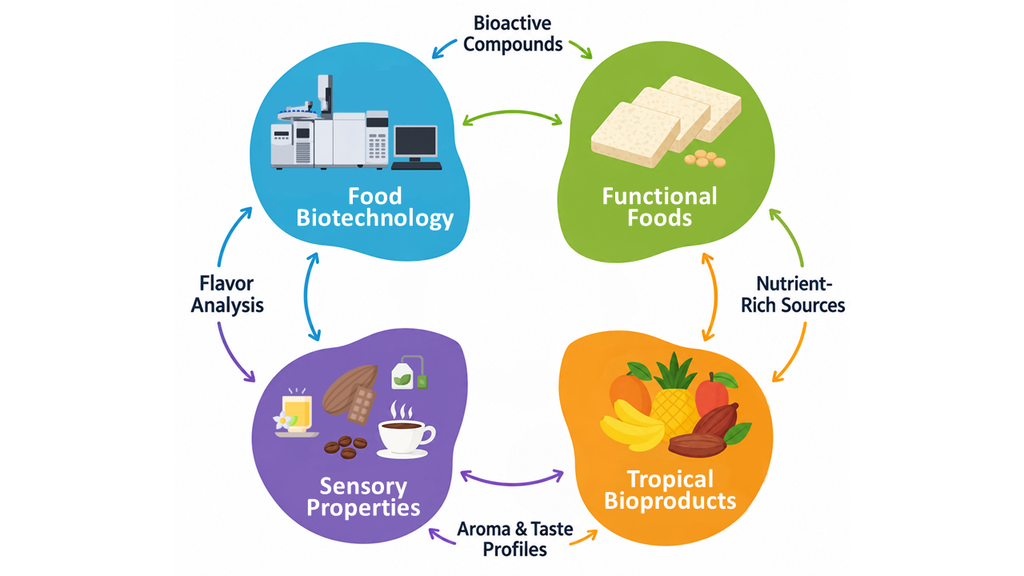
What makes Indonesian specialty coffee so aromatic? Which compounds in tempe benefit human health? We answer questions like these through food metabolomics, combining GC-MS and LC-MS/MS profiling, data science, and sensory evaluation to decode food quality, flavor, and function at the molecular level. We focus on adding value to underexplored and underutilized food resources, particularly tropical products such as cocoa, coffee, sago, coconut, and tempe, and on upcycling food waste to build a more sustainable food system. Our work spans four areas: bioresource exploration and upcycling, food processing technology, food for health and well-being, and fermentation technology. Through partnerships with industry and research institutions worldwide, we turn scientific discoveries into practical food innovations that contribute to SDG 2 (Zero Hunger), SDG 3 (Good Health and Well-being), and SDG 12 (Responsible Consumption and Production). In our multinational lab, we train the next generation of international leaders in food and agricultural technology.
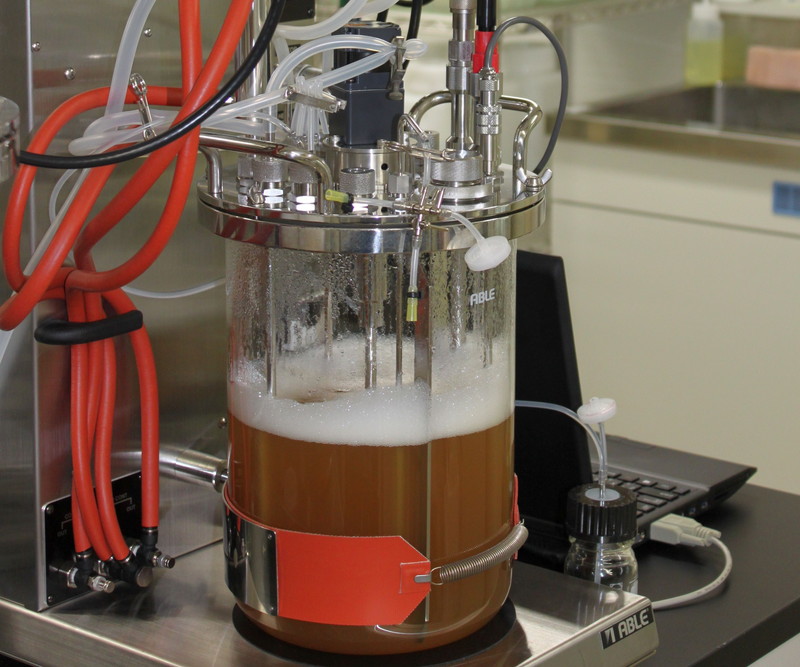
Biochemical engineers are required to possess an integrated knowledge of governing biological properties and principles of chemical engineering methodology and strategy. We deal with the design, operation and optimization of bioprocesses concerned with the production of biological product by microbial and mammalian cells, including up- and down-stream processing working with industries. Current topics are mammalian and microbial cell and cell culture engineering for the production of biologics. Target biologics are enzymes, cytokines, therapeutic antibodies, vaccines and stem cell for cell therapy and drug evaluation.
Bioresource Engineering Area
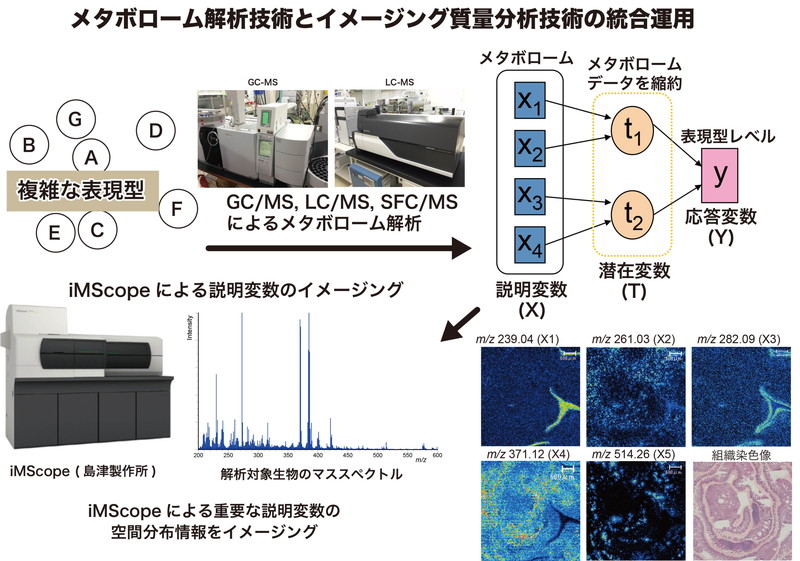
In a turn of the century, environmental, food and energy problems are becoming more inevitable. Now is the time to develop an environmentally friendly and sustainable socialsystem; biotechnology plays a key role in this challenge. Bioresource Engineering is a technology in search of a “core biological agent”, and to evaluate its practicality. Our laboratory challenges the issues utilizing metabolomics and imaging mass spectrometry as our core competence. Our mission is to raise human resources, who will be the international leaders of the Biotechnology field.
Many chemicals have been released into the environment in our modern society. However, despite much concern about possible harmful effects of the chemicals, their actual biological effects on humans and wildlife remain unclear. Our laboratory studies the biological responses elicited by environmental chemicals and is also establishing a new system for detecting chemicals using biological materials.
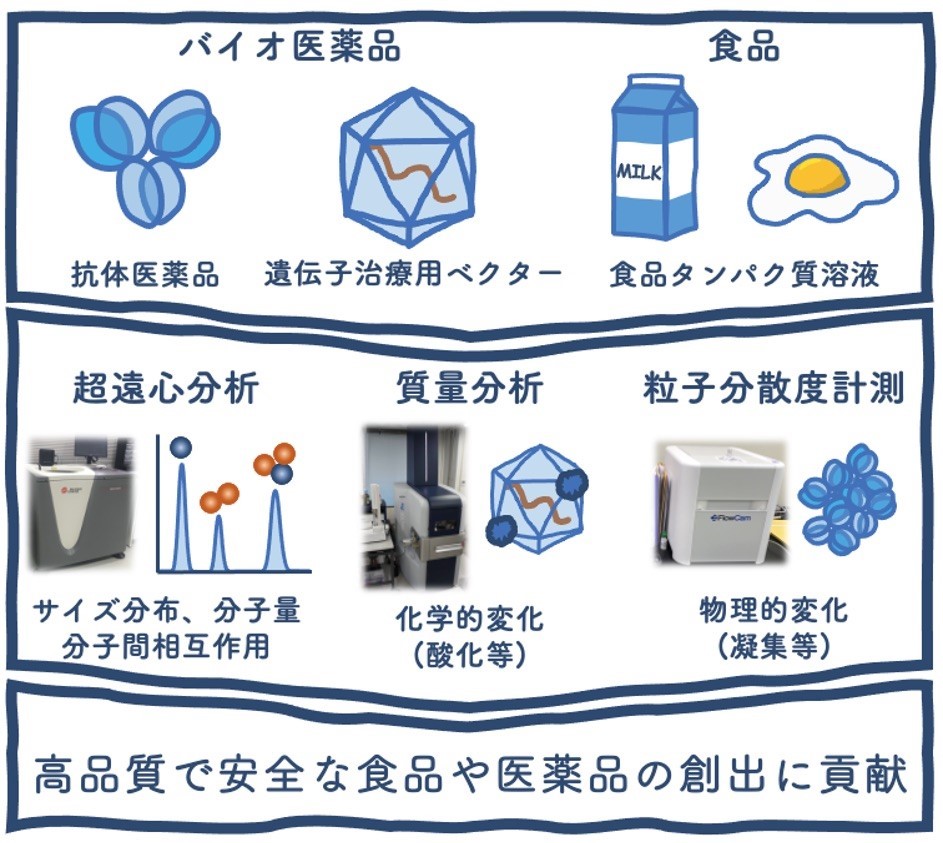
Foods and drugs are produced by using biotechnology approaches. Our laboratory aims at contribution to produce food and drugs with higher quality and more safety though understanding physico-chemical properties and functions of biopolymers such as proteins, nucleic acid oligosaccharides. We are also engaged in the development of states-of-arts methods including mass spectrometry and modern analytical ultracentrifugation for deep and total understanding of the systems. Biophysical and biochemical analyses of food and food products are also conducted.
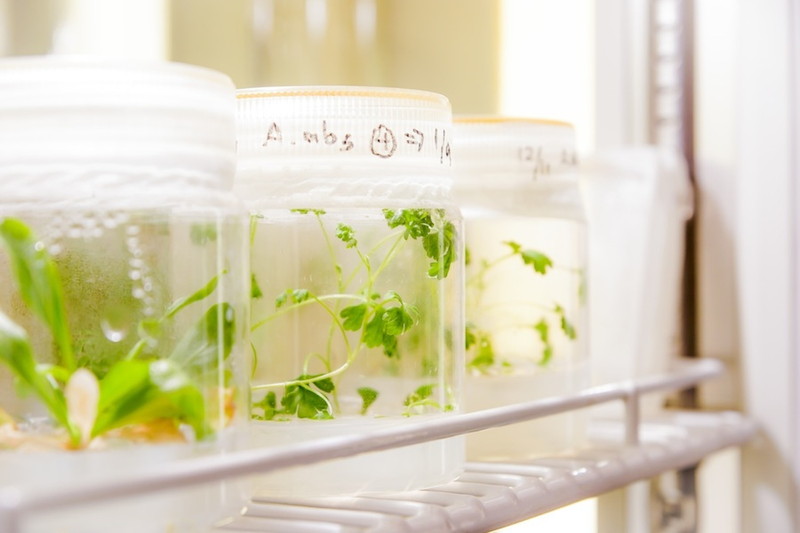
Plants produce a huge variety of specialized metabolites with different biological activities. Our primary interest is to understand the regulation and the synthesis of these compounds in plants identifying the genes involved in its biosynthesis and producing them using genetically modified organisms (bacteria, yeast, algae and model plants). More recently, we are promoting the study of valuable crops in a changing environment by combining genomics, metabolomics and genome editing technologies. Our goals and findings may contribute to promote health and increase food production in a climate-changing world.
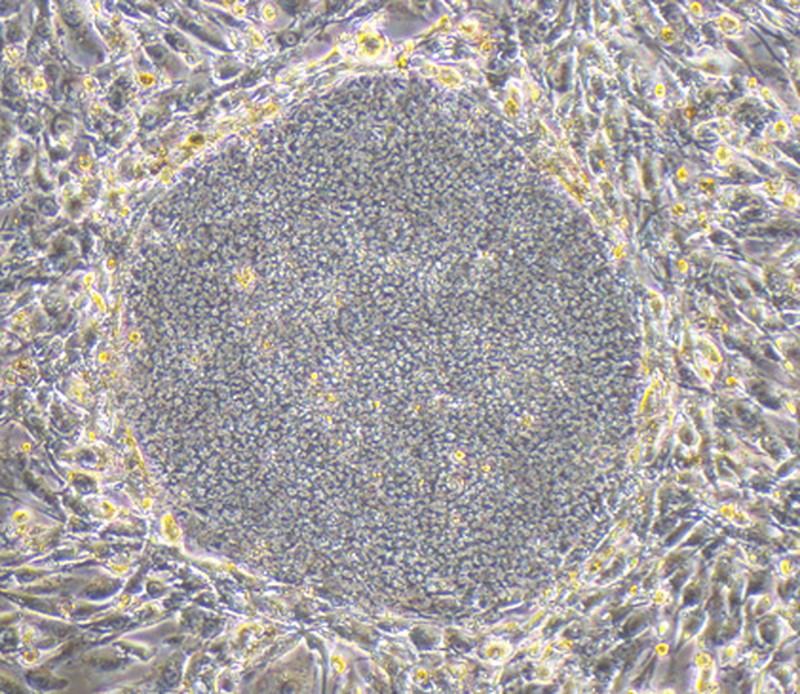
We are conducting applied research on cell manufacturing such as modeling, optimization, measurement, and process development by elucidating biological phenomena for human tissues. In particular, we are working on the design, quality evaluation, and stabilization of stem cell manufacturing processes, including iPS cells and mesenchymal stem cells, which are expected to be applied to regenerative medicine.
Functional Microbe Technology Area
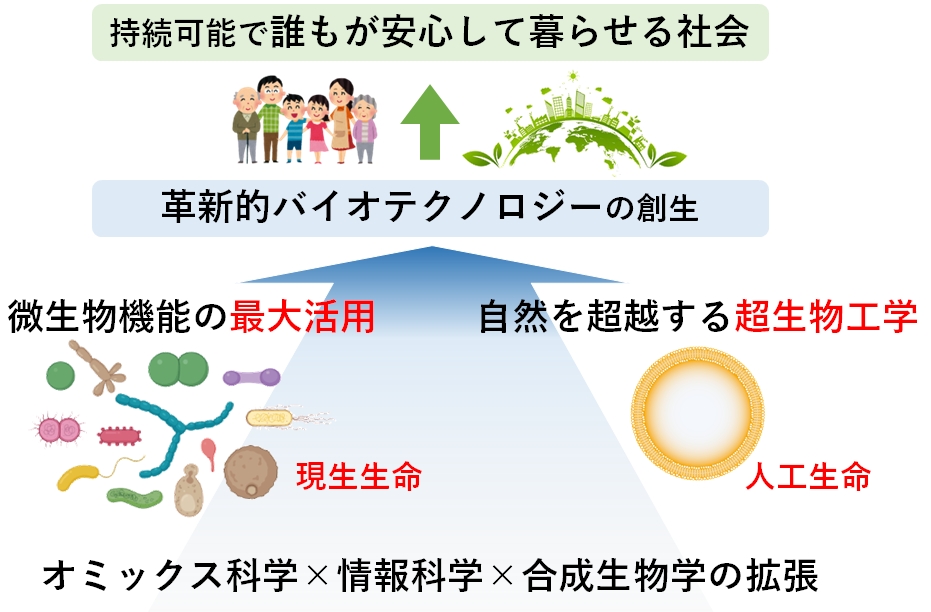
The vision of our laboratory is to create innovative biotechnologies to realize a society where everyone can live in comfort. To realize this vision, we are developing next-generation biotechnologies by analyzing, reconstructing, and applying the extremely diverse functions of microorganisms by expanding the framework of omics science, information science, and synthetic biology.
Top