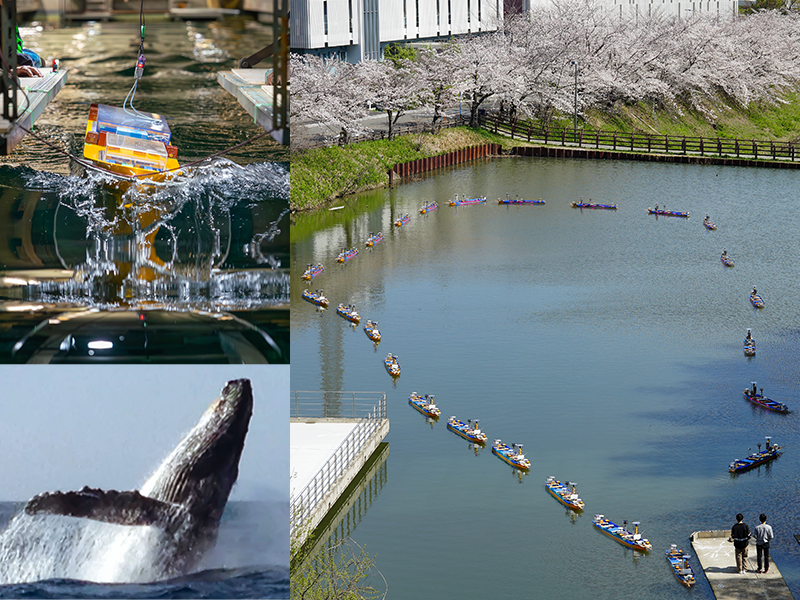
This subarea investigates artificial intelligence to be applied to ship design and operation. For preventing sea disasters which could result in loss of many human lives as well as preserving marine ecosystem, ship dynamics and hydrodynamics are focused in the light of free-running model experiments, nonlinear dynamics, automatic control theories, random process theory, underwater acoustics and so on. The research results could contribute to development of autonomous ships, stability criteria against capsizing, and environment-friendly ships, which could realize smarter ship designs.



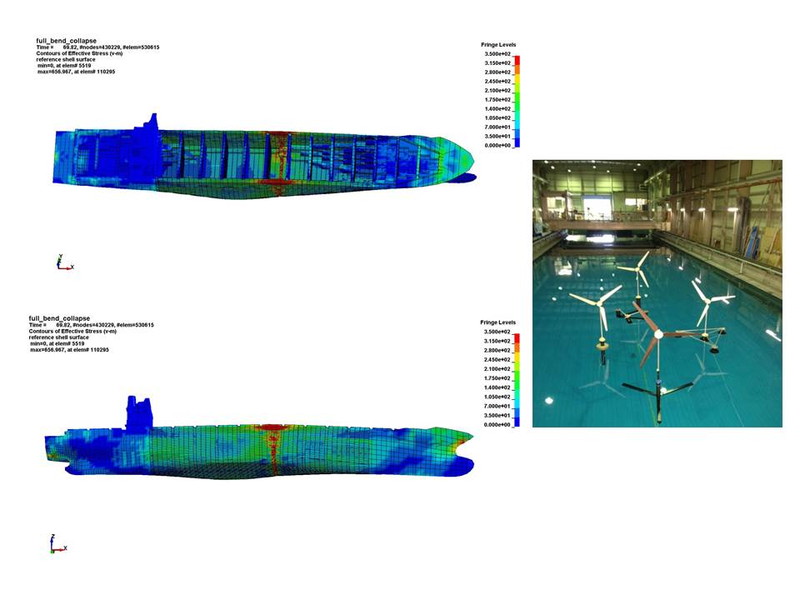
This subarea deals with a wide range of research topics related to strength of ships and offshore structures. The research topics include 'hydro-elastoplasticity problem of ship', 'Interaction between global (hullgirder) and local (e.g. double bottom) strength', 'behavior of structures for harnesing renewable energy under combned wind and wave loads', 'single-point-moored floating structure', 'strength analysis of deep-sea risers and drill pipes', 'aquacultural net', 'VLFS', etc. The staffs and students amounting to about 25 in number are yielding new research findings every day.
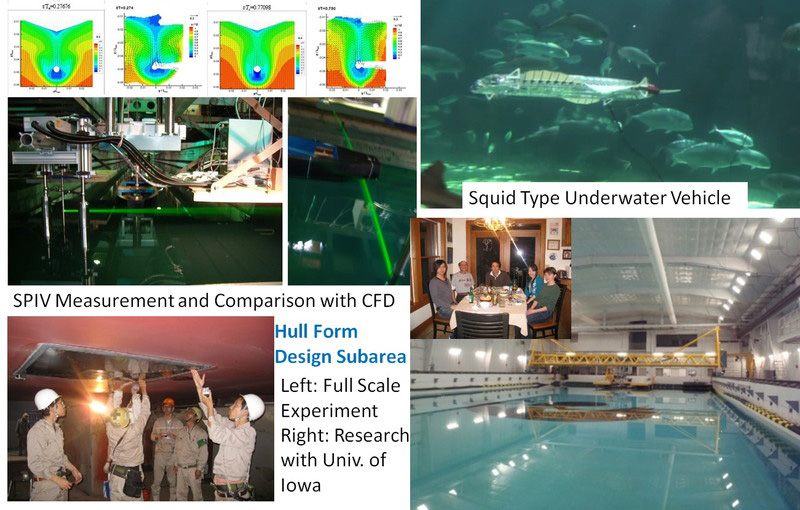
In the Subarea of Marine Hydro- Science and Engineering, the education of basic hydrodynamics and applied fluid dynamics on ship and ocean application are provided. Hydrodynamic problems related to Ship hulls, underwater vehicles, underwater vehicle systems, renewable energy generation systems, seafloor drilling systems are investigated using CFD(Computational Fluid Dynamics)including advanced code development, TFD(Theoretical Fluid Hydrodynamics) including explanation of new phenomena and EFD(Experimental Fluid Dynamics) including advanced image measurement system
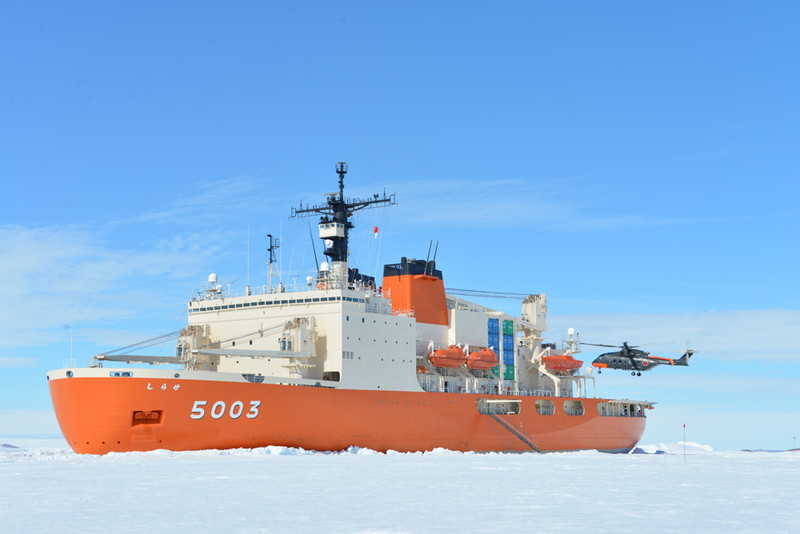
We pursue education and research on material and related technologies for asset integrity management of ships and offshore structures (fatigue and corrosion), design of ships and offshore structures in ice sea (maneuverability and structural response under ice load), fabrication technologies of large steel structures (curved plate forming, straightening, quality control).
With wave-body interactions as the core theme, the propulsion and seakeeping performance of ships in actual seas are studied in terms of theoretical analyses, numerical computations, wave-basin experiments, and onboard data analyses. As university-industry collaboration, “a prediction and analysis system for ship propulsion performance in waves” is developed by integrating analysis tools developed so far. In addition, we are also doing research on cloaking of a floating body, wave-energy absorption, and development of a floating platform for offshore wind-energy utilization.
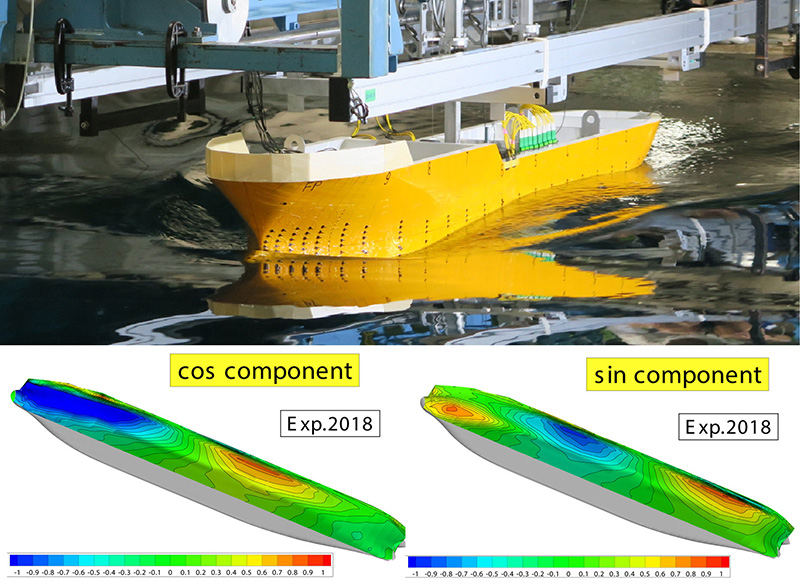
Improvement of maintenance manner for existing structures and application of highly-durable materials to newly-built structures are required to achieve the long service life of infrastructure. Advanced technology contributed to infrastructure design and maintenance is studied in our laboratory. Research topics are as follows;
- Nondestructive inspections and monitoring technology
- Repair and reinforcement of structural members (e.g. Fiber reinforced concrete)
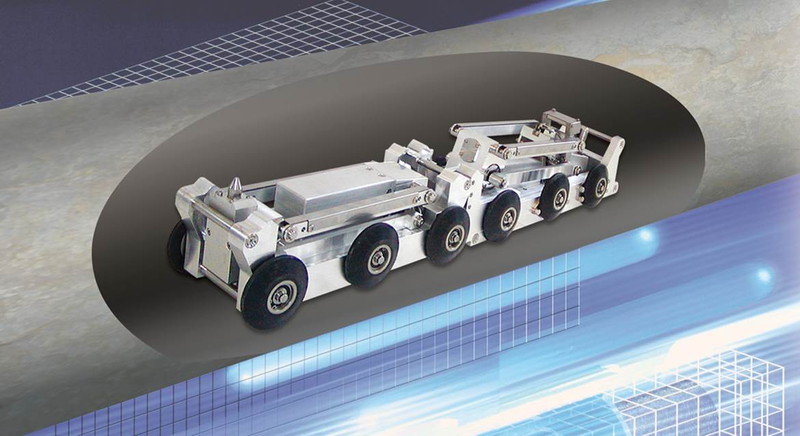
The Laboratory of Structural Engineering strongly contributes to the development of structural design codes and bridge constructions based on an original elasto-plastic finite displacement analysis method and precise experiments. Moreover, in collaboration with governments, design offices and fabricators, promotion of advanced technology for long life span and rehabilitation of metropolitan infrastructures, and improvement of structural performances are current topics of the laboratory.
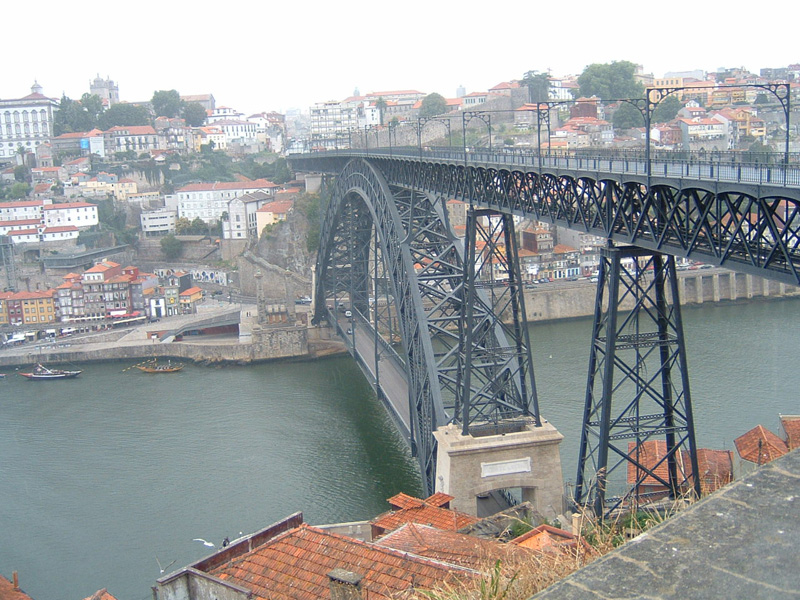
Soil and ground play vital roles in infrastructure development, water resources and its circulation, ecosystems, disposal of waste, and supply of energy resources. To realize sustainable utilization of the geo-environment, we conduct research and technical development related to soil and rock mass aimed at construction and maintenance of earthen structures that are stable against heavy rainfall and earthquake, beneficial use of waste/recycled materials, waste containment, remediation of contaminated site, geological repository of high-level radioactive waste, and development of geothermal reservoir.
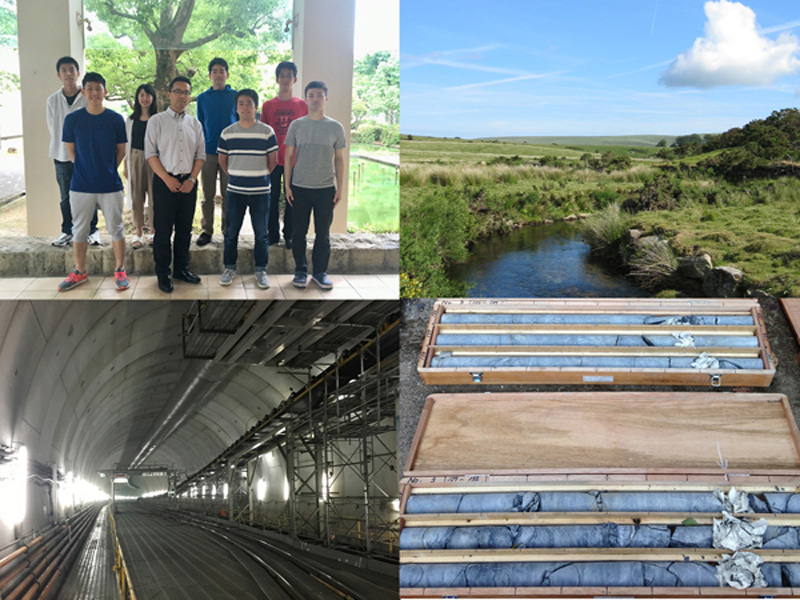
Land Development and Management Engineering Subarea is commonly called as Coastal Engineering Laboratory. Aiming at harmonization of development and environmental conservation, we are tackling various coastal problems such as coastal protection against beach erosion, tsunami and storm surge, optimal design of port facilities, preservation of shallow waters, coastal dunes, etc. through field observation, model experiments, and computer simulations.
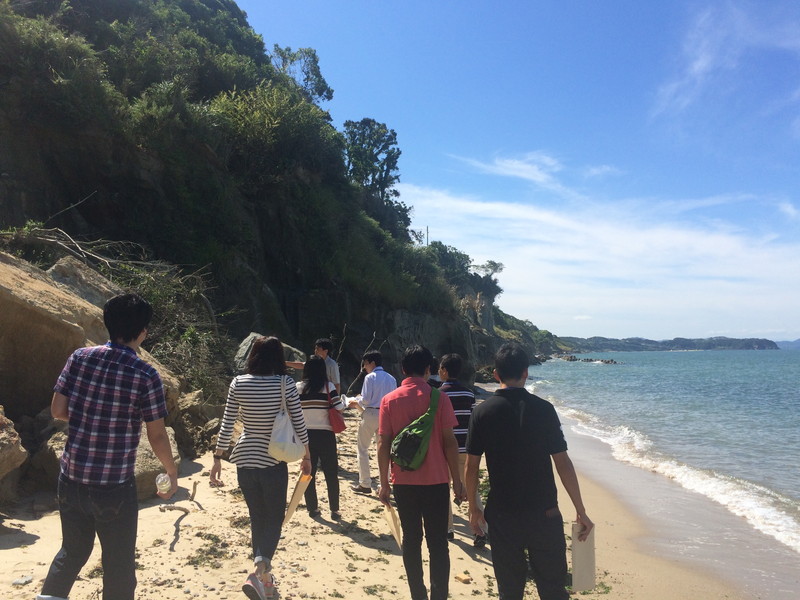
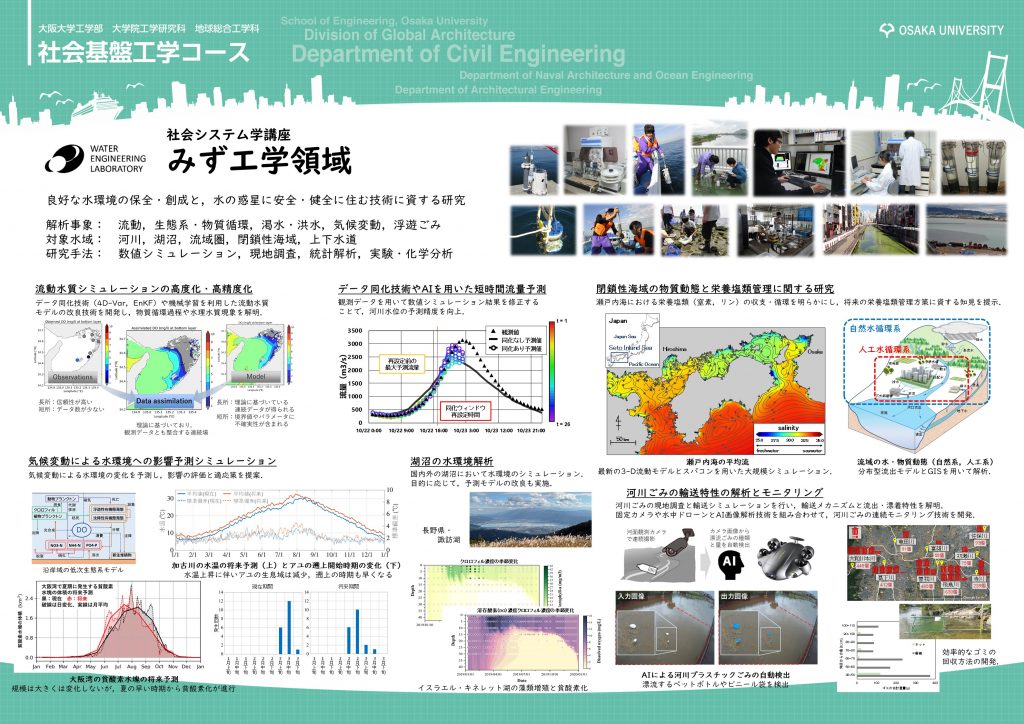
This laboratory is dedicated to wide range of research on hydraulics and water environment. Our researches have centered on computational fluid dynamics and environmental analysis by field observation. Currently, our primary interest is to analyze and simulate bio-geochemical processes and nutrient cycles in urban tidal rivers, estuaries, coastal seas, lakes and watersheds.
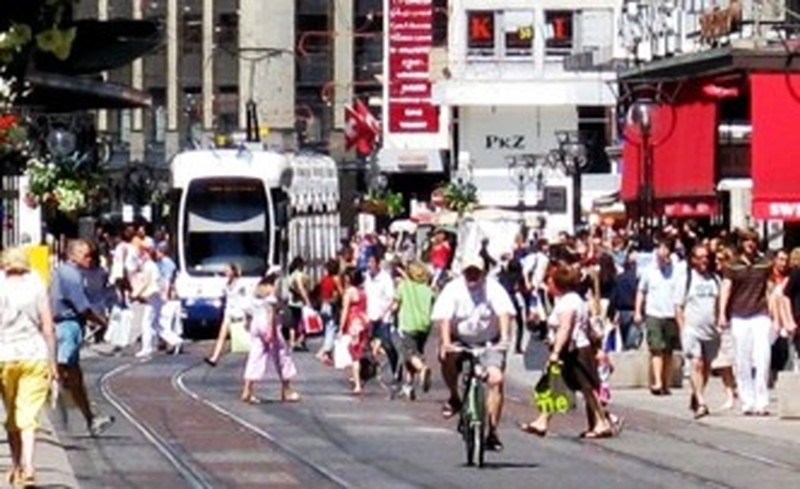
Transportation and Spatial Planning Subarea
We have been investigating integrated transportation systems and community building suitable for a future society.
1.Visioning sustainable transport, by evaluating effect of assist-system for sustainability of urban transport and transportation planning system with on slow mobility
2.Solving traffic congestion and accidents on a highway , by analysis of the cause which traffic congestion using a driving simulator
3.Ensuring Mobility in Daily Living by Local public transport collaborated with the resident and Special transport service for impaired and elderly people.
Today, a half-century subsequent to the era of accelerated economic growth—when civil infrastructure was robustly developed—Japan faces emerging challenges, such as the ageing of civil infrastructure and potential natural disasters. Within this sphere, our focus lies in addressing the managerial problem of effectively operating and maintaining the existing civil infrastructure to mitigate these issues. Our approach is characterized by two primary research themes. The first theme addresses the engineering predicament of predicting civil infrastructure deterioration, for which we are developing predictive models using data science, encompassing mathematical statistics and the principles of artificial intelligence. The second theme pertains to the economic challenge of optimal budget allocation under constraints, tackled through the application of econometrics to resolve this optimization issue.
In recent years, we have also begun to explore broader research like Digital Transformation (DX) technology—integrating data across multiple fields to augment decision-making processes—and Evidence-Based Policy Making (EBPM), which is used to devise management strategies grounded in scientific evidence.

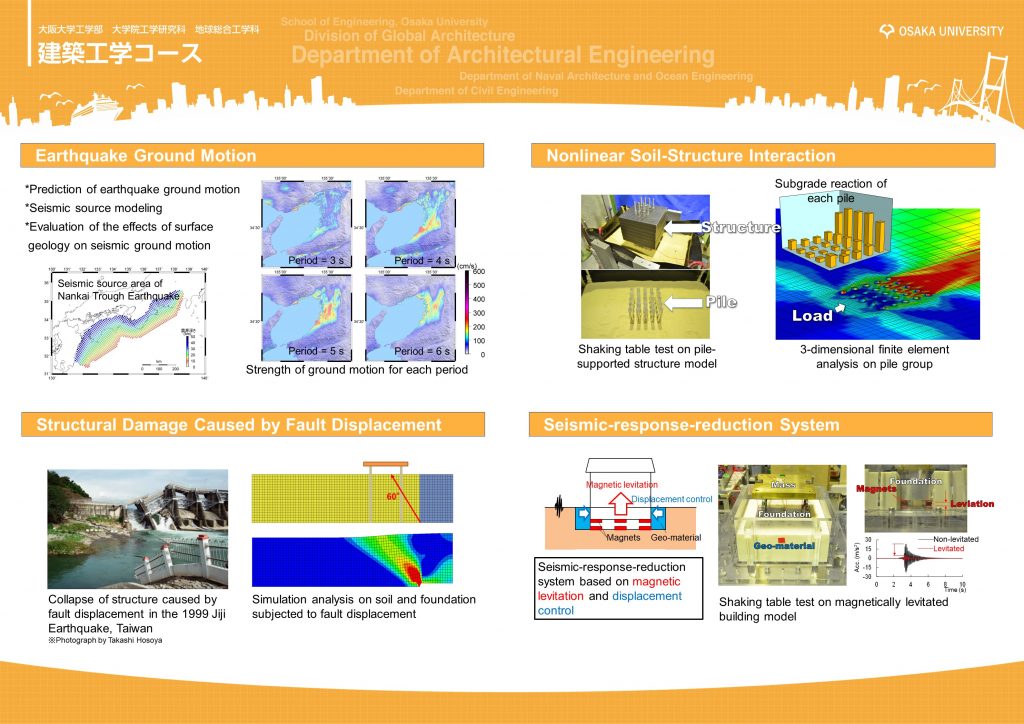
We aim at improving earthquake-resistant performance of buildings. Our research topics are as follows:
- Prediction of earthquake ground motion
- Seismic source modeling
- Evaluation of the effects of surface geology on seismic ground motion
- Base isolation system and soil improvement method
- Dynamic soil-structure interaction
Our research group mainly studies seismic performance of concrete building structures: reinforced concrete, prestressed concrete, CLT-concrete composite, and masonry through experimental, analytical, and theoretical approaches. Research interests also cover design methodology for new construction, seismic retrofit for substandard existing buildings, and field investigation on earthquake damage.

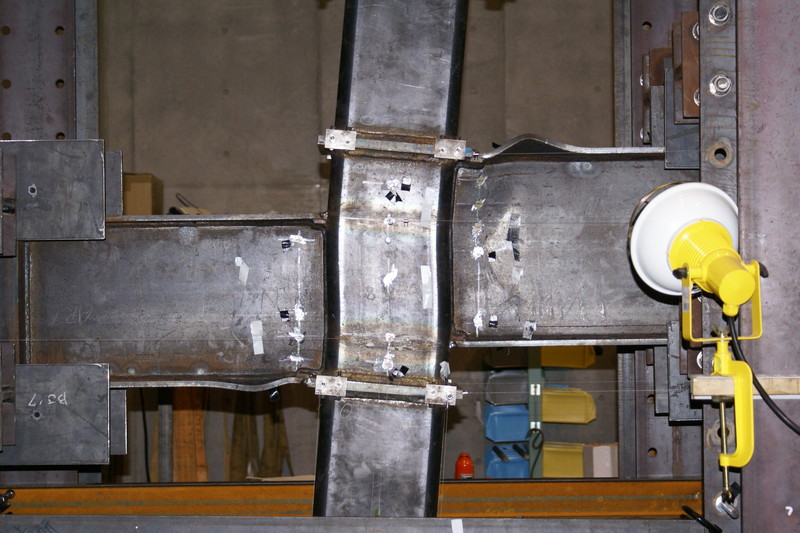
We conduct research on the mechanical property of materials, members and joints and on the theory of seismic design, forcussed on steel structures.
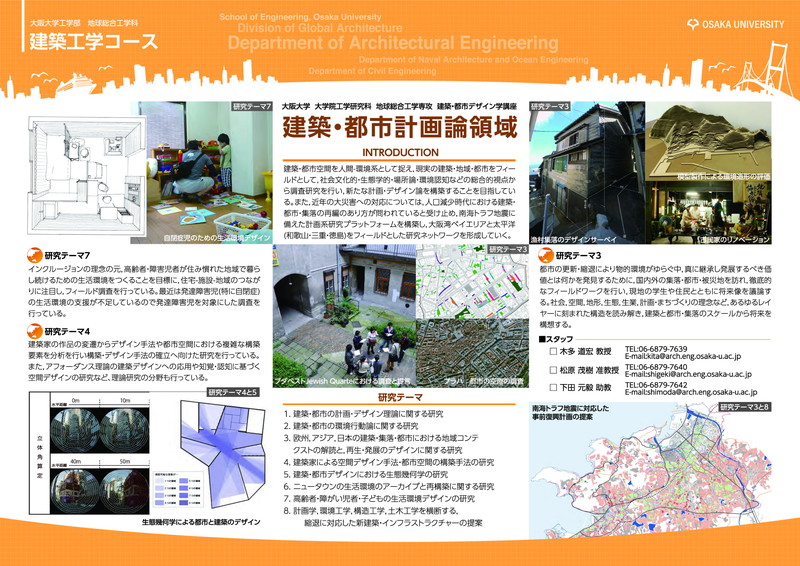
Our main and shared interest is the relationship between human beings and spaces. We research and practice the design of architecture, city, and region in order to improve and enrich human beings, communities, and societies. We uphold the “wholeness of human beings and their environments”, which develop and form systems together. Our research and design, including urban planning, are conducted from the idea of the “area’s context”, which means that the spaces that we experience are based on the geographical and topographical structures as well as the social, perceptual, and economic structures.
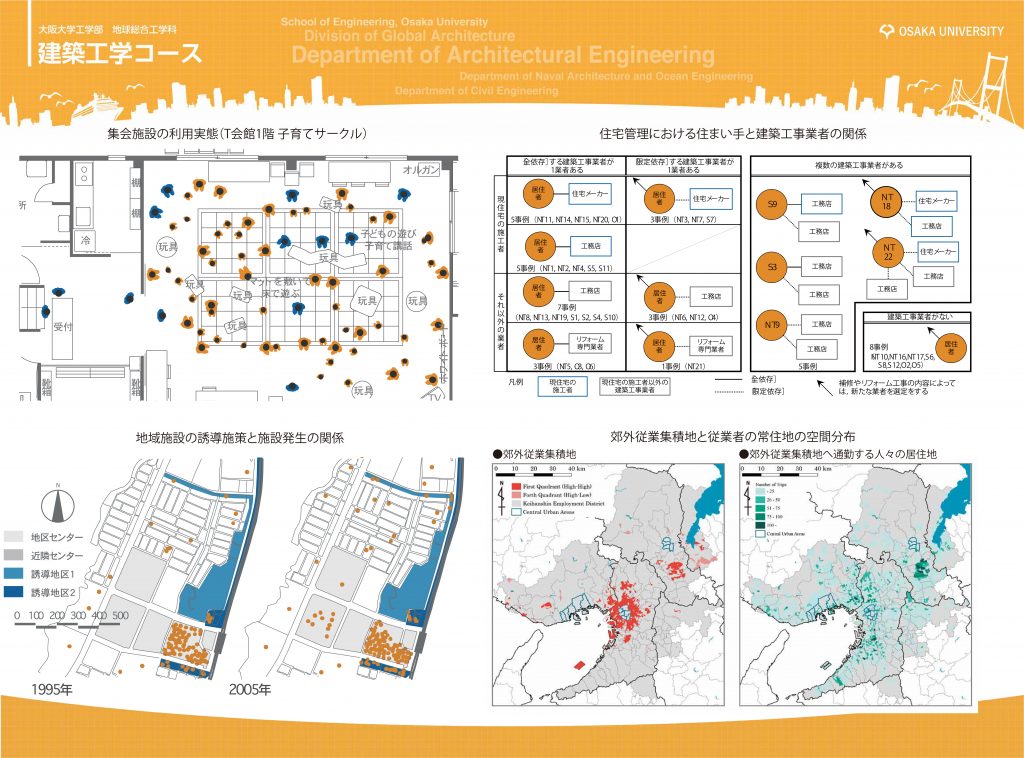
We elucidate the interrelationship between “spatial structures and social systems” and “human behavior and psychology” in architecture and urban spaces. We conduct research on spatial composition in architecture and cities, disaster prevention planning, community facilities, and methods for developing housing and residential areas. In particular, recent years have focused on research into the sustainable regeneration of residential areas and cities within a society facing population decline and climate change.
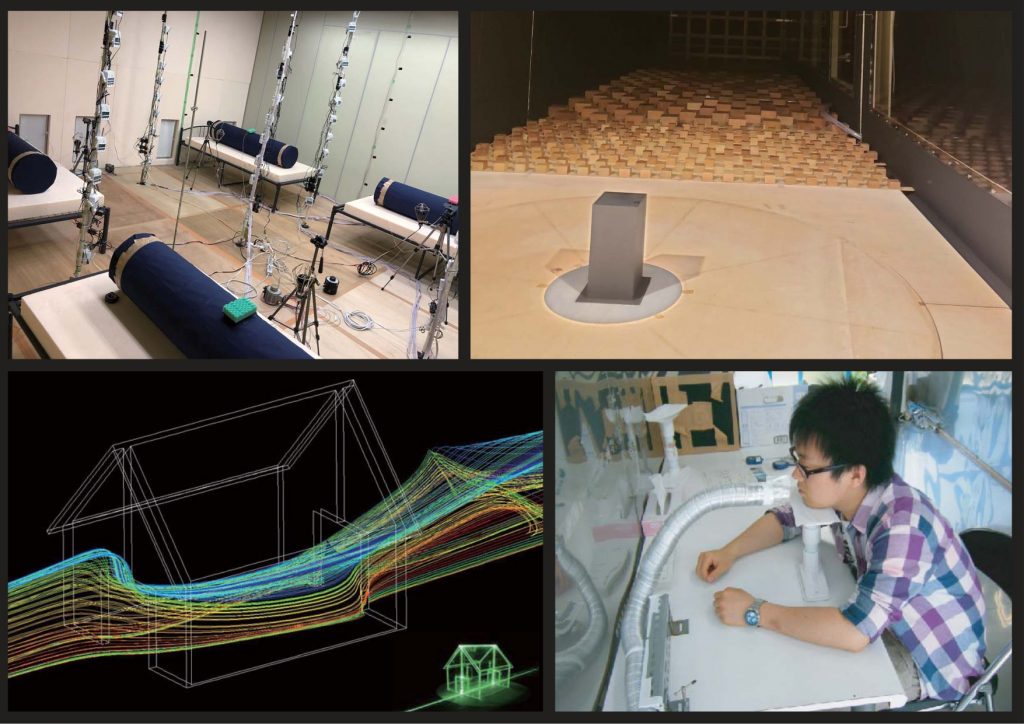
In order to create a comfortable and healthy living space and achieve the purpose of building energy saving, our research is mainly aimed at improving the urban and building environments through appropriate design of heat, air, light and sound in buildings. The content of our research is categorized as follows, from the perspective of human to architecture.
1) Environmental Psychology and Physiology: Relationship between Physical Stimulation and Psychological and Physiological Response of Human
2) Built Environmental Engineering: Analysis and evaluation methods of building environment
3) Building Equipment Engineering: Design and evaluation methods of equipment system
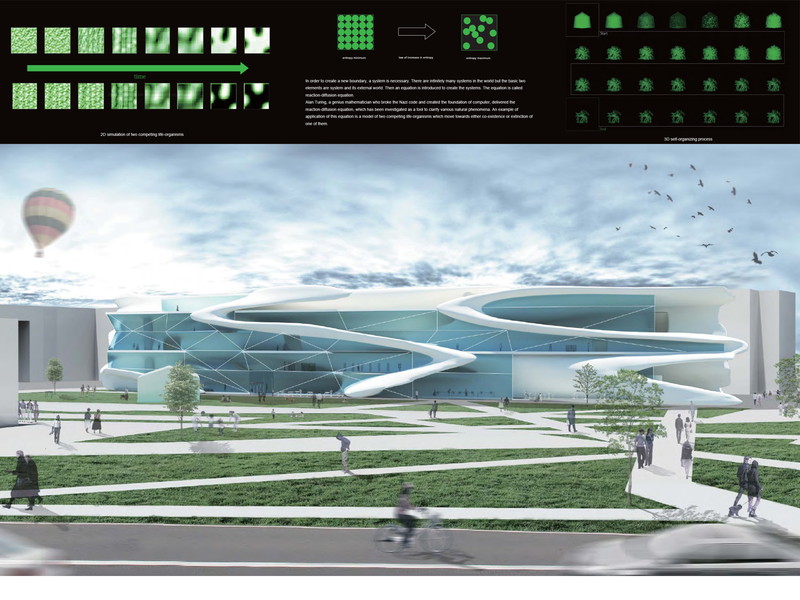
Our laboratory (Architectural Morphology Subarea) is involved research on the digitization of the morphological composition in urban and built environment and research on the construction of cyber communities, development of crowd behavior simulations, research on BIM in architectural design, and research on morphological information processing in graphic science.
Top